Tambourine
First Impression: A Melody in Thread
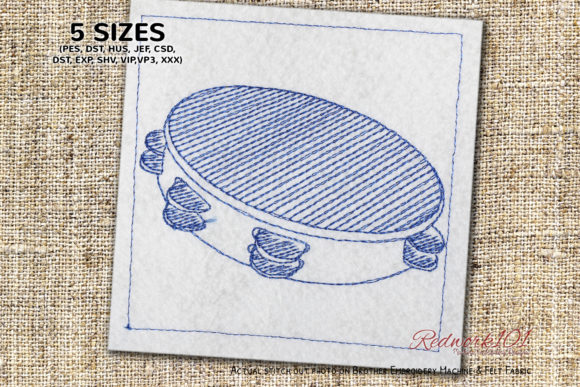
The Tambourine design immediately catches the eye with its rhythmic, textured layout. It feels like a musical motif translated into embroidery—playful yet intentional. The central element is the tambourine itself, rendered with clean lines and subtle shading that gives it depth without overwhelming the design. The Box Stitch, though optional, adds a tactile quality that could make the finished product feel more dynamic.
Mood & Layout: Rhythmic and Versatile
Tambourine exudes a sense of rhythm and movement, fitting perfectly within the music category. Its layout is balanced, allowing it to adapt well to different placements on a sweatshirt. Whether placed on the chest, sleeve, or back, the design maintains its visual appeal. The spacing between elements ensures clarity, making it suitable for both minimalist and decorative applications.
Chest Placement: Bold and Recognizable
On the chest of a neutral-colored sweatshirt, Tambourine stands out with its bold presence. The design’s symmetry and clear outlines make it highly readable, even at smaller sizes. This makes it ideal for boutique brands aiming for a strong visual identity. For oversized hoodies, the design can be scaled slightly to maintain proportion without losing detail.
Sleeve Accents: Subtle Yet Impactful
When used as a sleeve accent, Tambourine adds a touch of personality without overpowering the garment. Its placement along the sleeve creates a casual yet stylish look, perfect for seasonal apparel. The design’s simplicity allows it to blend seamlessly with pastel colors while still maintaining a pop of interest.
Back Designs: A Statement Piece
On the back of a sweatshirt, Tambourine becomes a statement piece. It can be used as a full-back design or paired with other elements for a layered look. The design’s ability to work across different placements makes it a versatile asset for custom apparel and boutique merchandise.
Thread Color Contrast & Stitch Density
The design’s success depends heavily on thread color contrast. A dark fabric may require lighter threads to ensure visibility, while pastel backgrounds benefit from complementary shades. Stitch density also plays a role in how the design holds up over time. A higher density can enhance detail but may affect comfort, especially on thicker fabrics.
Stabilizer & Fabric Texture
Using the right stabilizer is crucial for maintaining the design’s integrity during embroidery. The texture of the fabric will influence stabilizer choice—thicker materials may need more support, while thinner ones might require a lighter option. Ensuring the stabilizer is properly removed after embroidery helps preserve the handmade product’s quality.
Hoop Size & Washing Durability
Tambourine’s size and complexity mean careful consideration of hoop placement is necessary. A larger hoop may be needed for detailed areas, especially when working with high stitch counts. Washing durability is another concern, particularly for commercial use. Testing the design on a few samples before mass production can help identify any potential issues.
Enhancing Product Value & Buyer Trust
As a machine embroidery design, Tambourine has the potential to elevate the perceived value of a boutique brand’s product line. Its unique and recognizable style fosters buyer trust, especially among Etsy sellers and small shop owners who prioritize quality and originality. The design’s versatility also supports a range of customer engagement strategies, from lifestyle product photography to printable mockups.
Visual Recognition & Handmade Presentation
Tambourine’s distinct visual language makes it easy to recognize, which is key for brand identity. The design’s handmade presentation aligns with the aesthetic of small businesses and creative entrepreneurs. Whether used as a standalone piece or part of a larger collection, it reinforces the authenticity and craftsmanship associated with custom apparel.
Conclusion: A Design That Resonates
Tambourine is more than just an embroidery file—it’s a design that resonates with both the craft and the consumer. Its balance of playfulness and structure makes it suitable for a wide range of applications, from casual wear to boutique branding. As an experienced designer, I see great potential in this design for those looking to create something meaningful and marketable in the world of custom apparel.